
Tech neck, also known as text neck or forward head posture, which is a common issue
caused by prolonged use of digital devices. A significant challenge in office or desk work is
the prolonged periods of physical inactivity. This leads to reduced blood circulation,
exhaustion of postural muscles, and increased muscle tightness. Research endorses the
incorporation of microbreaks enhance comfort and alleviate pain.
HOW TO RECOGNISE TECH NECK:
To recognize tech neck, look out for common signs and symptoms like neck pain and stiffness,
especially after using digital devices. You might also experience frequent headaches, often
originating from the neck or base of the skull, shoulder tension, and poor posture, including
forward head posture or slouching with rounded shoulders. You might also experience fatigue
or muscle strain in the neck and shoulders, tingling or numbness in the arms or hands, and
pain or discomfort when looking up or down.
WHAT TRIGGERS TECH NECK:
Tech neck is often caused by a combination of factors, including prolonged screen time, poor
posture, inadequate ergonomics, and frequent use of device. These habits can put strain on
your neck and shoulders, leading to discomfort and pain.
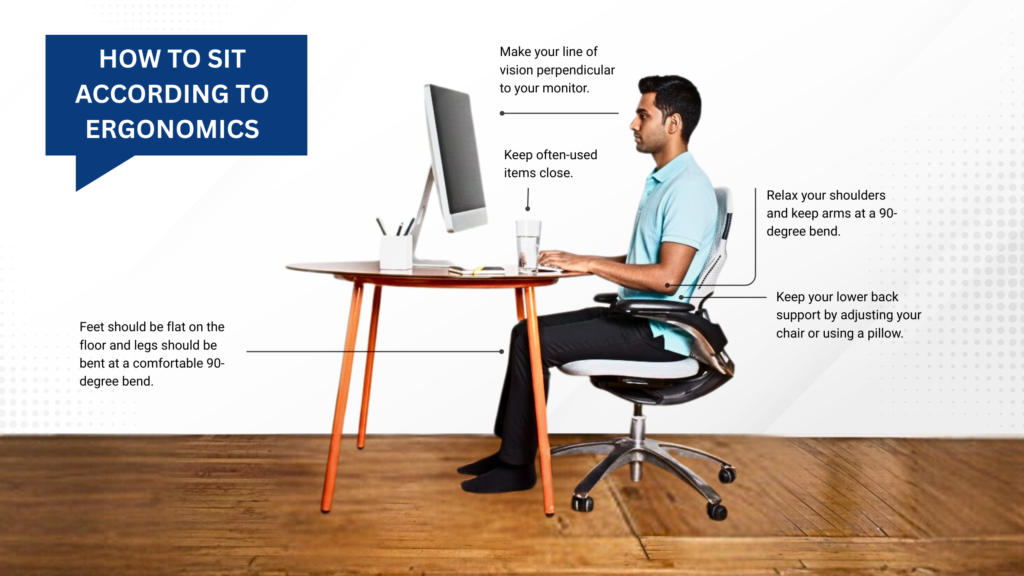
ERGONOMIC ADJUSTMENTS:
- The monitor has to be at about arm-length distance and at eye-level or slightly lower.
- Elbows should be supported on the armrests or desk.
- Lumbar support must be provided to maintain the natural curvature of the spine.
- Knees bent at 90 degrees and thighs parallel to the floor.
- The individual shouldn’t have to rotate the body to reach the computer or desk.
- Sufficient leg space is also important.
- Feet must be supported.
With simple exercises, you can start to reverse the effects of screen time, ease upper back
and neck strain, and restore a healthy posture. These moves are designed to help you feel
better and move more freely while protecting your body for the future – no matter how
much time you spend in front of a screen.
EXERCISE 1: CHIN TUCKS

- Lie supine (horizontally, facing up) with your head in a neutral position.
- Gently draw your chin towards your throat, creating a double chin.
- Hold for 5-10 seconds, progressing to 30 seconds.
- Completely three sets of eight to 12 repetitions.
What’s it good for?
Significant improvements in deep neck flexor endurance (the group of muscles at the front
of the neck, which are crucial for neck stability and posture) and reduced cervicogenic
headache frequency (a headache caused from pain in the neck).
EXERCISE 2: LATERAL NECK STRETCH
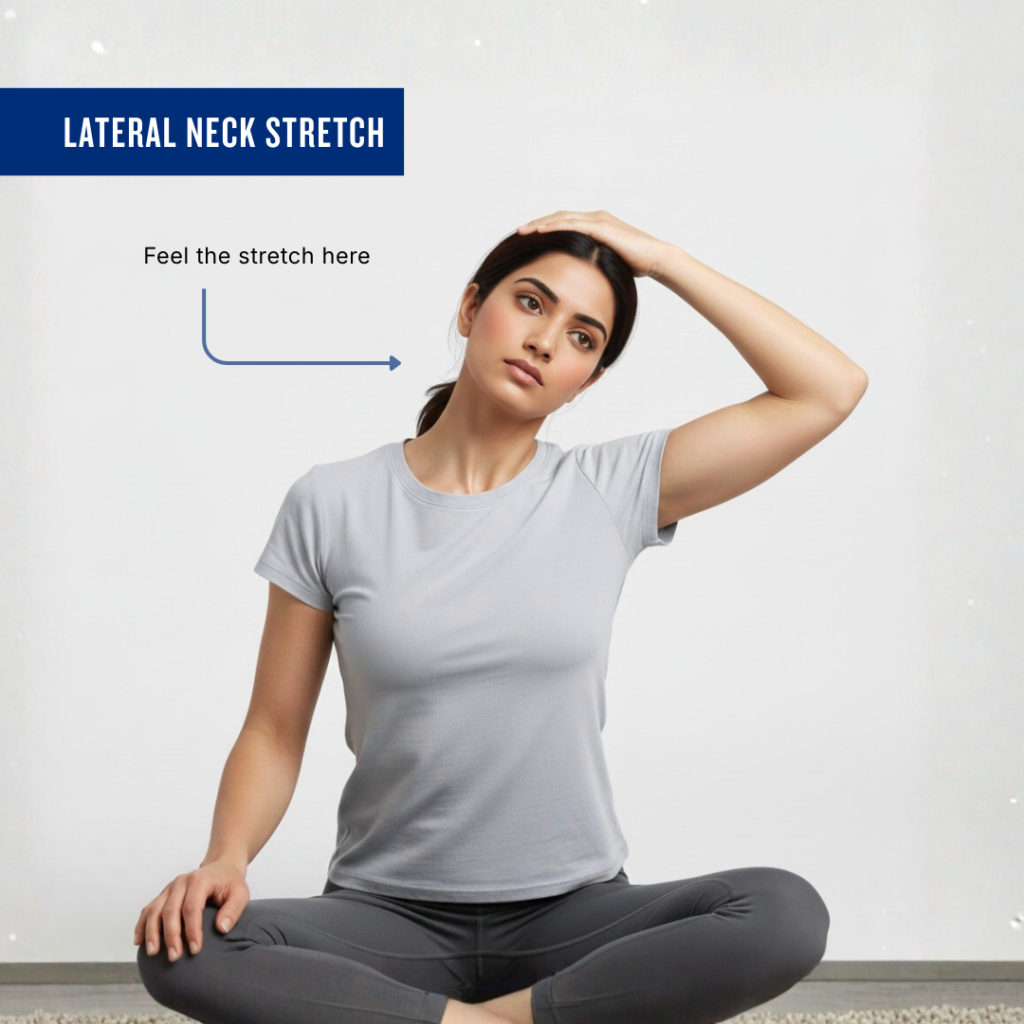
- While sitting tall, anchor one arm under the chair.
- Laterally (sideways) flex your head away from the anchored arm.
- Add slight flexion component (a small degree of bending or flexing).
- Hold for 30-60 seconds, and complete three or four repetitions on both the sides
What is it good for?
Significant reductions in neck pain and disability scores.
EXERCISE 3: FOAM ROLLER THORACIC EXTENSION
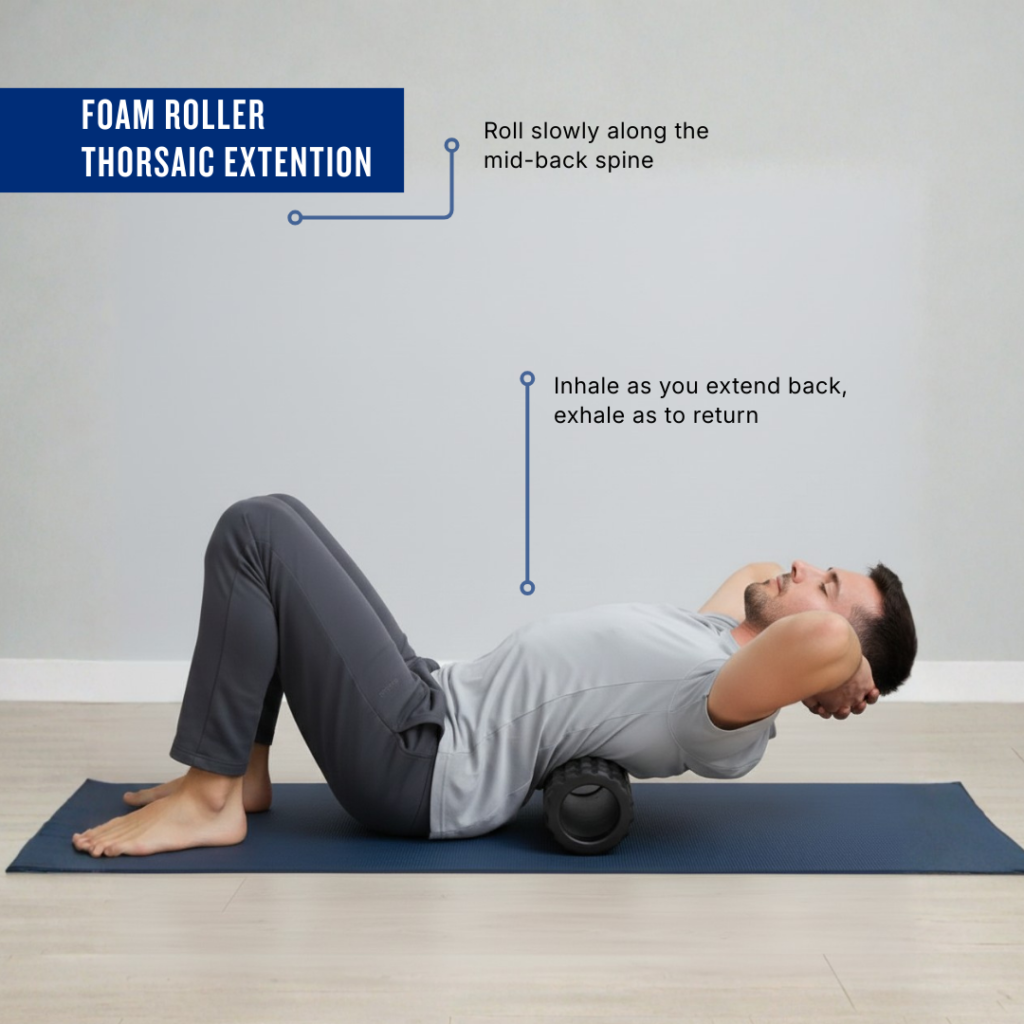
- Position a foam roller at T6-T8 level.
- Support your head with your hands.
- Extend over the roller, controlling movement.
- Complete eight to 12 repetitions.
What is it good for?
Significantly improved cervical (neck) range of motion, and reduced forward head
posture.
EXERCISE 4: WALL SLIDES
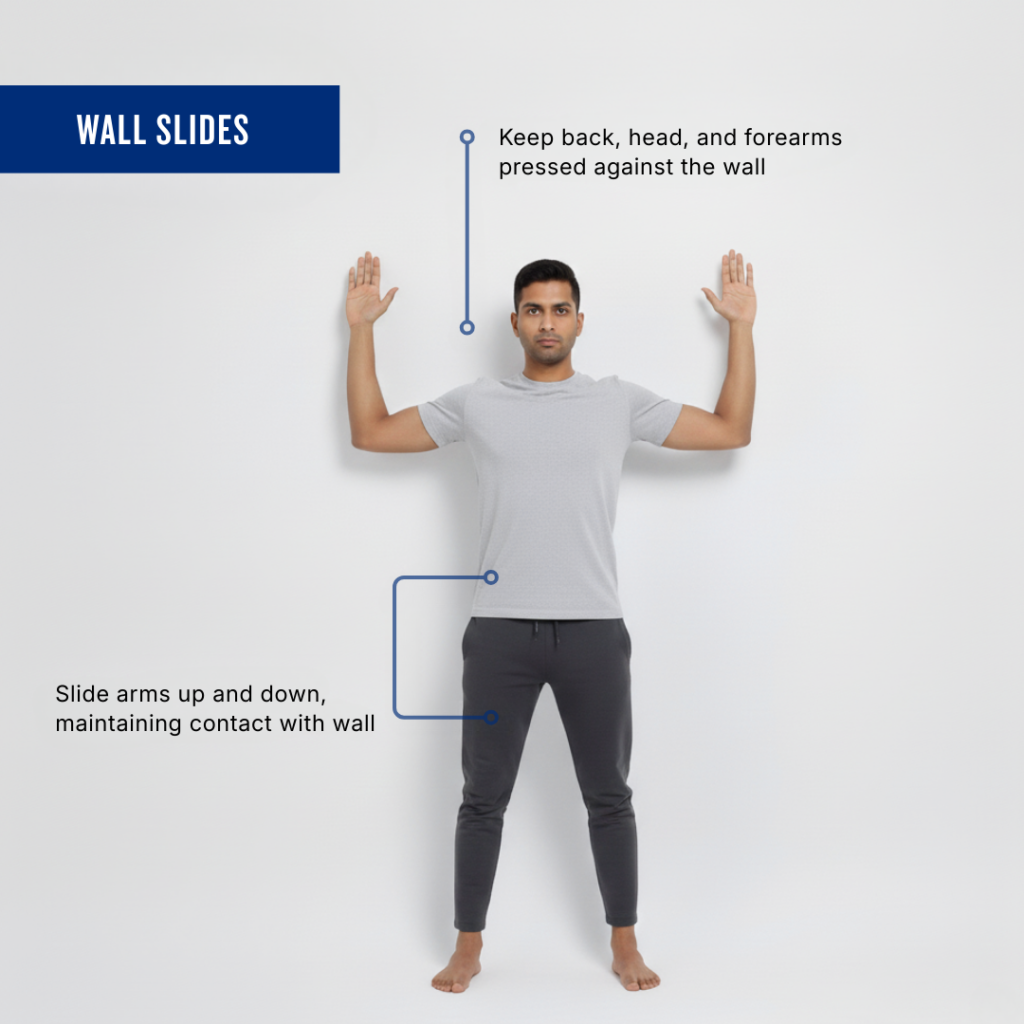
- Stand with your back against wall.
- With your arms in a 90-degree abduction and elbows at 90 degrees, slide your arms
- up the wall, maintaining contact.
- Focus on scapular retraction (movement of the shoulder blade towards the spine).
- Complete two or three sets of 10-15 repetitions.
What is it good for?
Specific neck and shoulder exercises reduced pain intensity by 42 per cent in office
workers.
EXERCISE 5: SUBOCCIPITAL SELF-MASSAGE
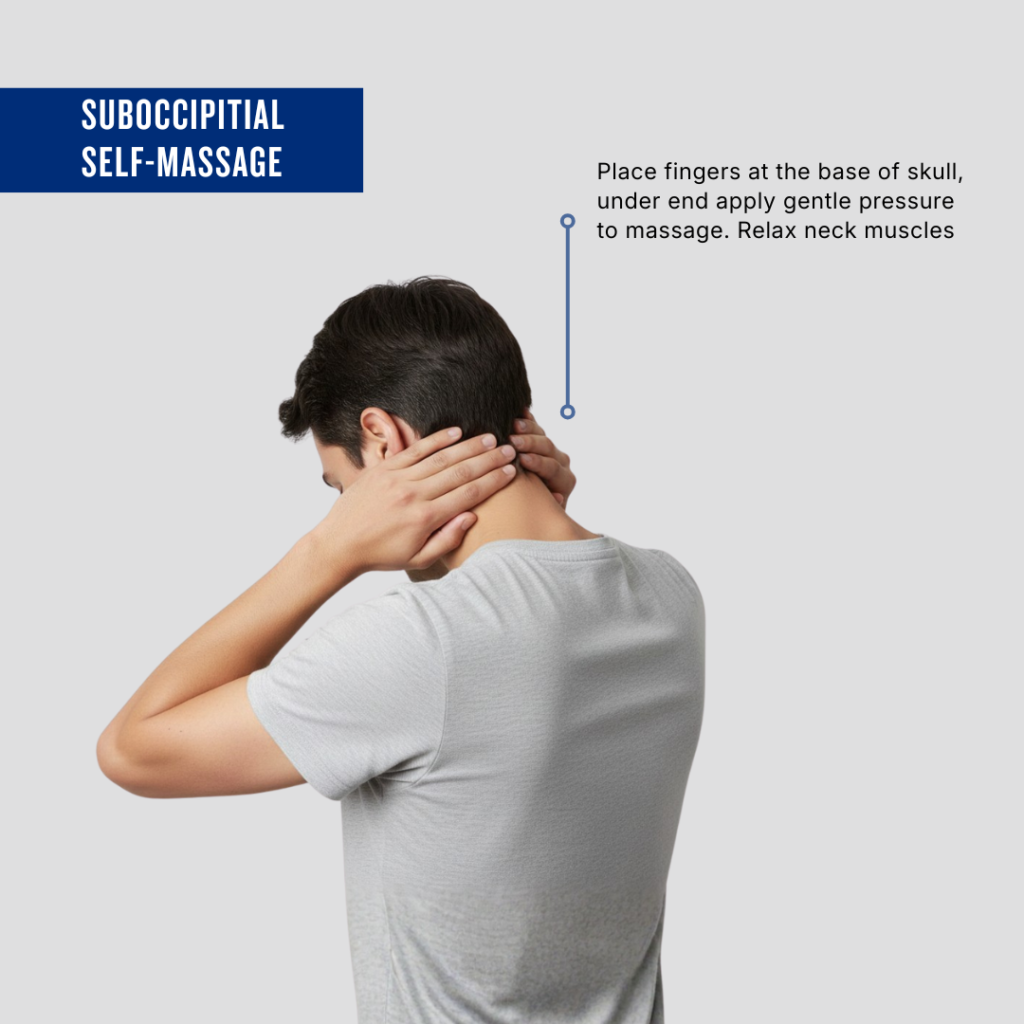
- Put tennis balls in a sock.
- Lie supine with the tennis balls at the base of your skull.
- Apply gentle pressure with small nodding movements for 2-3 minutes.
What is it good for?
Manual therapy targeting suboccipital muscles significantly reduced cervicogenic headache
(headache caused from pain in the neck) intensity and frequency.
REFERENCES
- Mclean L, Tingley M, Scott RN, Rickards J. et al. (2001)
- Helen salter et al. (2025)
- Jull et al. (2008)
- Ylinen et al. (2007)
- Quek et al. (2013)
- Andersen et al. (2011)
- Fernández-de-las-Peñas et al. (2006)